Camouflage nets stopped working: the fight is now over heat, radio and radar returns

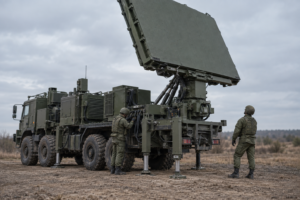
military signature management - photo by Kampus Production via Pexels
In short: a vehicle can be perfectly hidden from the human eye and still be the brightest object on a thermal screen. Modern detection stacks infrared, radar and radio emissions, so concealment means managing the signature a sensor reads, not the shape a soldier sees. Units that cut heat, cut transmissions and keep moving survive; units that only hang nets get found.
Painted patterns and foliage were built for an enemy with eyes and binoculars. That enemy is rare now. The thing looking for you is a sensor, and it reads the parts of the spectrum your paint does nothing about.
Read also: The fuel truck decides the battle, not the tank at the front · Artillery is not killed by armor, it is killed by the radar that finds it while the shell is still climbing · One interceptor cannot cover the sky: why modern air defense is built in layers
Four signatures, four different problems
Every platform leaks across several channels at once, and each one needs a separate answer. Hiding the visual outline while the engine deck glows is a half measure.
Heat is the signature that gets people killed
An idling generator, a recently fired barrel and a crew-warmed cabin all stand out against cool ground, and they stand out most at night, when the surrounding terrain has given up its heat. A thermal camera on a cheap quadcopter sees that contrast from a kilometre up. This is the same economic shift described by loitering munitions: the sensor is cheap, so there are many of them, and they are always overhead.
Thermal discipline is mostly procedure, not equipment. Park under tree canopy, shut engines rather than idling, put insulating mats between hot metal and open sky, and accept the loss of comfort and speed that comes with it.
Radio emissions are a map of your command post
A headquarters announces itself through traffic volume. Direction-finding equipment does not need to break the encryption; it needs the bearing and the duration. Two bearings give a location, and the location goes to a fire mission. The same logic that lets counter-battery radar trace a shell back to the gun that fired it applies to a transmitter that stays on too long.
- Keep transmissions under the interval your opponent needs for a fix, and vary the schedule
- Use the lowest power that closes the link, not the highest the radio offers
- Separate antennas from the vehicles and tents they serve
- Run field wire or runners for anything that is not time critical
- Move the command post on a timetable, before anything suspicious happens
Why shaping and materials are not enough on their own
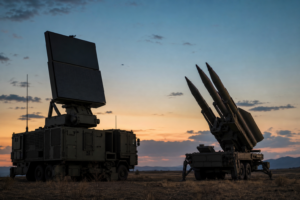
Radar-absorbing surfaces and angled facets reduce the return; they do not erase it. Low-frequency radar still gets a usable detection at reduced range, and reduced range is still a number. That is why a layered air defense network matters even against aircraft designed to be hard to see: each sensor type narrows the gap the previous one left.
Signature reduction buys time and distance. It does not buy invisibility, and planning that assumes otherwise fails on first contact.
The physics of cross-section reduction, absorbing materials and emission control are covered in the entry on stealth technology.
Walk your own position with a thermal sight at night and photograph what you see. Fix the three brightest objects first, and only then worry about the net.
More articles you may like
- The fuel truck decides the battle, not the tank at the front
- Artillery is not killed by armor, it is killed by the radar that finds it while the shell is still climbing
- One interceptor cannot cover the sky: why modern air defense is built in layers
- A tank’s thickest armor now weighs almost nothing and fires back
- The cheap drone that kills a tank: how loitering munitions broke the cost-per-kill math
- A bigger warhead is the wrong metric, accuracy is what decides the strike
Photo: Kampus Production / Pexels