A bigger warhead is the wrong metric, accuracy is what decides the strike
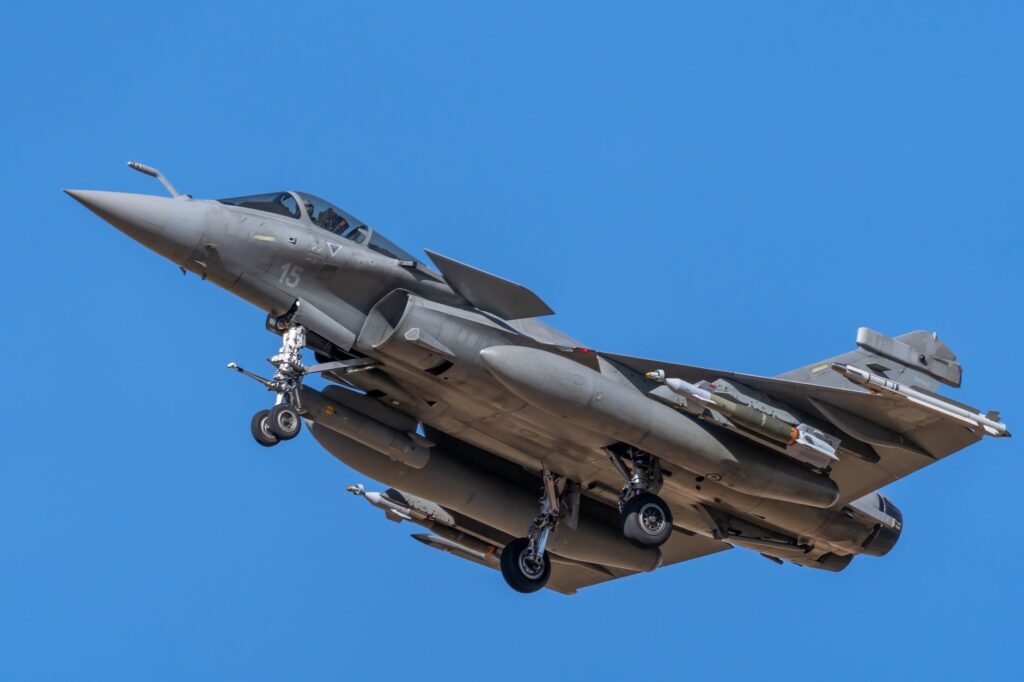
Precision-Guided Missiles Explained - photo by Rafael Minguet Delgado via Pexels
In short: a precision-guided missile does not win by carrying a bigger warhead, it wins by landing within a few meters of the aim point. Guidance systems, GPS, laser homing and data links have shifted the decisive variable from explosive mass to accuracy, letting a smaller charge do the work a large one used to need.
For most of the 20th century, hitting a target meant dropping many munitions and hoping one landed close. In World War II, bombing a single factory could take hundreds of unguided bombs and thousands of crew hours. The math was brutal: low accuracy demanded high volume, and high volume demanded huge warheads to compensate for the misses.
קראו גם: GPS is not a utility. It is a whisper that a jammer can shout over. · More firepower does not mean more effectiveness: how one precision missile beats a barrage · Not the prime minister, not just ceremonial: what the President of the State actually does
Guidance flipped that logic. A weapon that reliably lands within five meters of its target needs a fraction of the explosive that a weapon scattering across a hundred-meter circle does. Engineers measure this with Circular Error Probable (CEP), the radius within which half the shots fall. Lower CEP means fewer weapons, less collateral damage, and a smaller charge doing the same job.
How the guidance actually works
Modern precision weapons rarely rely on one method. Most stack several. A GPS and inertial navigation combination (INS) steers the weapon toward fixed coordinates, while a seeker in the nose handles the final approach against moving or precisely located targets.
Semi-active laser homing is the classic terminal method: a soldier or aircraft paints the target with a laser, and the missile rides the reflected energy down. Infrared and electro-optical seekers let a weapon lock onto a heat signature or a visual image instead. Rafael’s Spike missile family uses an electro-optical seeker with a fiber-optic or radio data link, so an operator can watch the missile’s own camera feed and redirect it mid-flight, even onto a target that was never visible at launch.
Numbers that show the shift
The contrast between guided and unguided munitions is not marginal. A JDAM kit bolted onto a plain gravity bomb pulls its typical error from over a hundred meters down to roughly five meters with GPS. The same principle reaches under the sea, where a modern torpedo uses acoustic homing and wire guidance to correct its course toward a maneuvering vessel rather than running a straight, predictable line.
Why the data link matters as much as the seeker
A seeker sees the target. The link decides who controls the shot. Fire-and-forget weapons cut the operator loose the instant they launch, which is fast but blind to changes. Man-in-the-loop weapons keep a channel open, and that channel is a form of military communication as critical as any radio net, because jamming or losing it can turn a precision weapon back into a guess.
The tradeoffs split roughly along these lines:
- GPS and INS: excellent against fixed coordinates, vulnerable to jamming and useless against a target that moves after launch.
- Laser homing: very accurate, but the target must stay painted, and smoke or cloud can break the beam.
- Electro-optical with data link: lets an operator retarget in flight, at the cost of a link that can be jammed or intercepted.
- Passive infrared: hard to jam and needs no external signal, but can lose a target whose heat signature fades.
What the accuracy revolution changes on the ground
Fewer weapons per target reshapes logistics. A unit that once needed a truckload of shells to neutralize a bunker may now carry a handful of guided rounds. Smaller warheads reduce the blast radius around a target, which matters when a strike sits near civilians or friendly forces. Precision also pushes cost the other way: a guided round runs far more than a dumb shell, so planners weigh a cheap miss against an expensive hit. The calculation now starts with the seeker and the link, not the size of the charge.
Reference and definitions in this article draw on the precision-guided munition overview.
מאמרים נוספים שיעניינו אתכם
- GPS is not a utility. It is a whisper that a jammer can shout over.
- More firepower does not mean more effectiveness: how one precision missile beats a barrage
- Not the prime minister, not just ceremonial: what the President of the State actually does
- Spike SR is a short range missile that is hand launched.
- An Overview of the Modern Torpedo Defense System
- Military communication
Photo: Rafael Minguet Delgado / Pexels