Artillery is not killed by armor, it is killed by the radar that finds it while the shell is still climbing
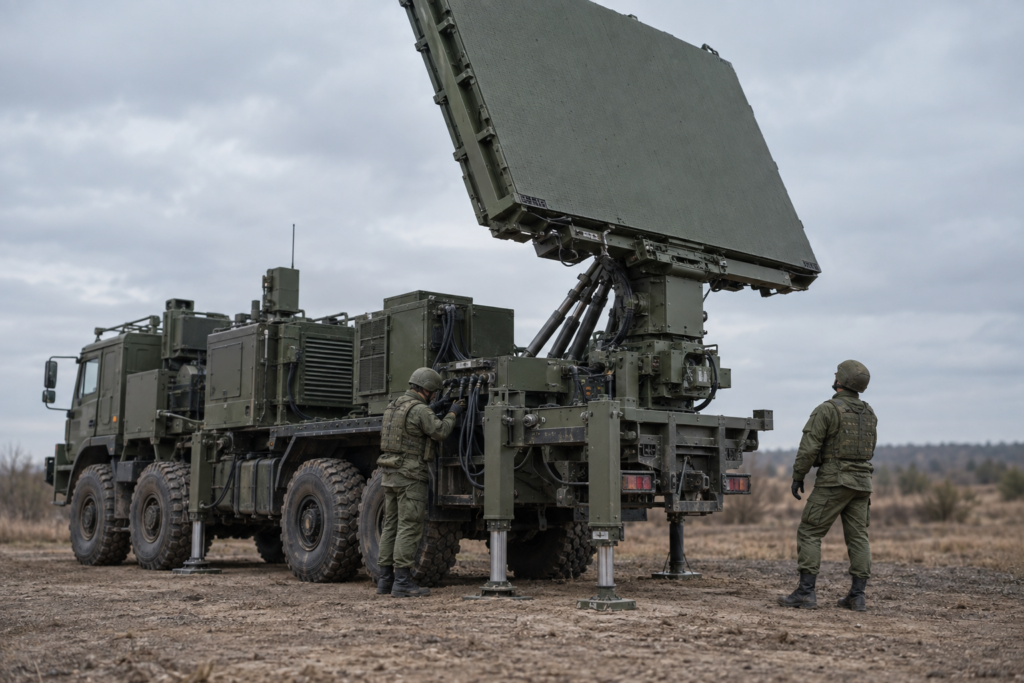
Counter-battery radar and artillery survivability
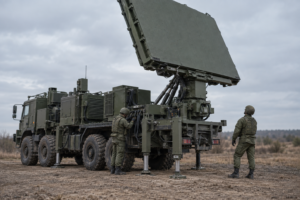
In short: a counter battery radar tracks an outgoing shell in flight and extrapolates its path backward to the gun that fired it. The firing position is compromised the moment the first round leaves the barrel, so survival now depends on how fast the crew can move, not on how well the position is dug in.
Gun crews used to worry about being spotted. Now they are spotted by default. The shell itself is the beacon, and nothing the crew does after firing can take that signature back.
קראו גם: One interceptor cannot cover the sky: why modern air defense is built in layers · A tank’s thickest armor now weighs almost nothing and fires back · The cheap drone that kills a tank: how loitering munitions broke the cost-per-kill math
The back plot, and why it works
A shell follows a ballistic arc that physics makes predictable. A radar that catches even a short segment of that arc can solve the trajectory and project it back to the launch point, usually within tens of meters. The same computation runs forward too, which is how the system warns troops about where the round will land.
Mortars are the easiest targets for this. Their high steep arcs sit cleanly in the radar’s field of view. Flatter trajectories from long range guns and rockets are harder, which is why radar siting and coverage sectors are planned as carefully as the gun positions themselves.
The loop that decides who survives
Every stage above is a race between two clocks. One clock is the attacker’s sensor to shooter loop. The other is the defender’s time to pack up and drive away. Modern self propelled guns are designed around that second clock, which is why displacement times of under a minute are advertised as a headline capability.
Shoot and scoot became doctrine, not a preference
Fire missions are now short by design. A few rounds, then movement, then a new position that was scouted in advance. Crews that stay to complete a long mission from one grid square are betting that nobody is listening, and that bet has been losing badly in recent conflicts.
This is also why a heavier warhead solves less than it used to. The same logic appears in the argument that accuracy decides the strike and in the case for using one precision round instead of a barrage. Fewer rounds means less exposure time, and less exposure time means a shorter window for the radar.
- Fire short missions and move before the counterfire can be cleared
- Scout the next two positions before occupying the current one
- Prefer self propelled platforms where the threat includes counter battery radar
- Use terrain masking so the outgoing arc is seen late rather than early
- Assume navigation may be degraded and keep a manual survey fallback
That last point matters more than it sounds. Fast displacement depends on knowing exactly where the gun is standing, and satellite navigation is the first thing an opponent attacks. The problem is the same one described in the piece on GPS being a signal a jammer can shout over.
What the radar does not solve
A detection is not a kill. The counterfire still needs guns in range, clearance, and a target that has not already moved. Against a well drilled crew the radar produces an accurate report about a patch of empty field.
The technical background on how these sensors compute the firing point is documented under counter battery radar.
Time your next live fire exercise from the first round to the moment the last vehicle clears the position. If that number is above two minutes, fix the drill before buying anything new.
מאמרים נוספים שיעניינו אתכם
- One interceptor cannot cover the sky: why modern air defense is built in layers
- A tank’s thickest armor now weighs almost nothing and fires back
- The cheap drone that kills a tank: how loitering munitions broke the cost-per-kill math
- A bigger warhead is the wrong metric, accuracy is what decides the strike
- GPS is not a utility. It is a whisper that a jammer can shout over.
- More firepower does not mean more effectiveness: how one precision missile beats a barrage