A tank’s thickest armor now weighs almost nothing and fires back
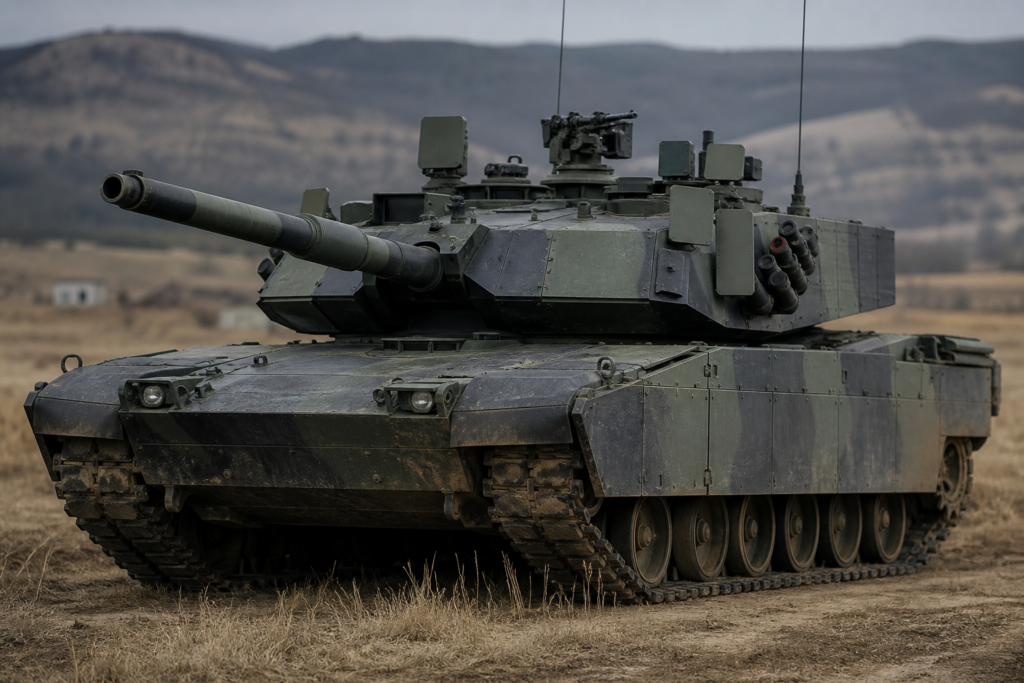
Active protection systems for tanks
In short: active protection systems shoot down incoming missiles and rockets before they hit the tank, instead of relying on heavier steel. Radar spots the threat, a computer tracks it, and a countermeasure destroys it a few meters out. This shifts tank survival from mass to reaction speed.
For a century the answer to a bigger gun was thicker armor. Add steel, add weight, lose speed and fuel range. That trade ran out of room. A modern anti-tank missile can punch through more steel than any tank can realistically carry.
קראו גם: The cheap drone that kills a tank: how loitering munitions broke the cost-per-kill math · A bigger warhead is the wrong metric, accuracy is what decides the strike · GPS is not a utility. It is a whisper that a jammer can shout over.
Active protection breaks the loop. Rather than absorb the hit, the tank intercepts the projectile in flight. A missile costing tens of thousands of dollars gets swatted by a countermeasure, and the crew inside never feels the impact. The math of attack and defense flips.
How the system reacts in milliseconds
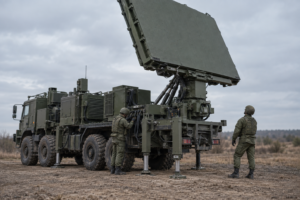
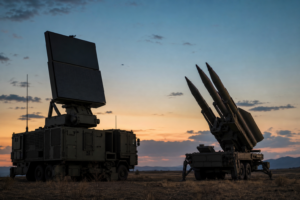
Small radar panels around the turret scan every direction at once. When something approaches at the speed of a rocket, the computer calculates its path and decides in a fraction of a second whether it will strike. If it will, a launcher fires a countermeasure to meet it a few meters from the hull.
The whole sequence finishes faster than a human could flinch. That speed is the point. The same logic that makes one precise missile beat a barrage applies in reverse here: a single well-timed interception beats layers of passive steel.
Hard kill versus soft kill
Most fielded systems combine all three. Passive armor handles the small stuff, soft kill diverts guided threats, and hard kill stops what gets close. Layering matters because no single method covers every angle of attack.
Why it changes the battlefield math
- A cheap threat no longer guarantees a kill on an expensive vehicle.
- Tanks can stay lighter, keeping speed and fuel range.
- Crews survive hits that would once have been fatal.
- Attackers must fire several rounds to saturate one defended target.
- Close urban fighting, where rockets come from rooftops, becomes survivable.
That last point reframes a threat we covered before. The rise of cheap drones that kill tanks pushed active protection from a luxury to a requirement, because a swarm of low-cost munitions is exactly what these systems are tuned to stop. Short range missiles like the hand-launched Spike SR forced the same rethink at the infantry level.
What comes next
The frontier is quantity, not just quality. Early systems carried enough countermeasures for a handful of intercepts. Against a swarm, that runs out fast. The next generation aims for more shots, faster reloading, and shared radar data between vehicles so one tank warns the next.
Technical background on how these systems classify and engage threats appears in the active protection system overview on Wikipedia.
Judge a modern tank by its reaction time, not its armor thickness. The steel matters less every year. The radar and the countermeasure matter more.
מאמרים נוספים שיעניינו אתכם
- The cheap drone that kills a tank: how loitering munitions broke the cost-per-kill math
- A bigger warhead is the wrong metric, accuracy is what decides the strike
- GPS is not a utility. It is a whisper that a jammer can shout over.
- More firepower does not mean more effectiveness: how one precision missile beats a barrage
- Not the prime minister, not just ceremonial: what the President of the State actually does
- Spike SR is a short range missile that is hand launched.